
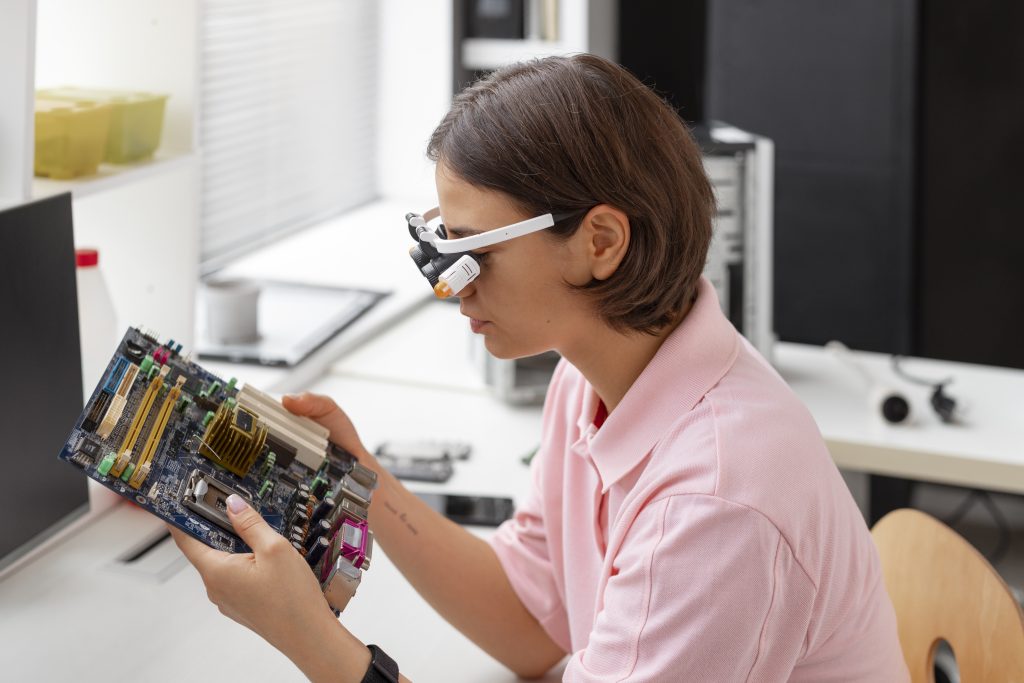
Why SoC is Important in Medical Devices
A System-on-Chip integrates multiple functions (CPU, GPU/DSP, memory controller, I/O interfaces, sometimes AI accelerators) into a single chip.
This allows medical devices to be:
Smaller (portable, wearable, or implantable)
Power efficient (important for battery-powered devices)
Highly reliable (fewer components, less failure points)
Capable of real-time processing (critical in life-support and diagnostic systems)
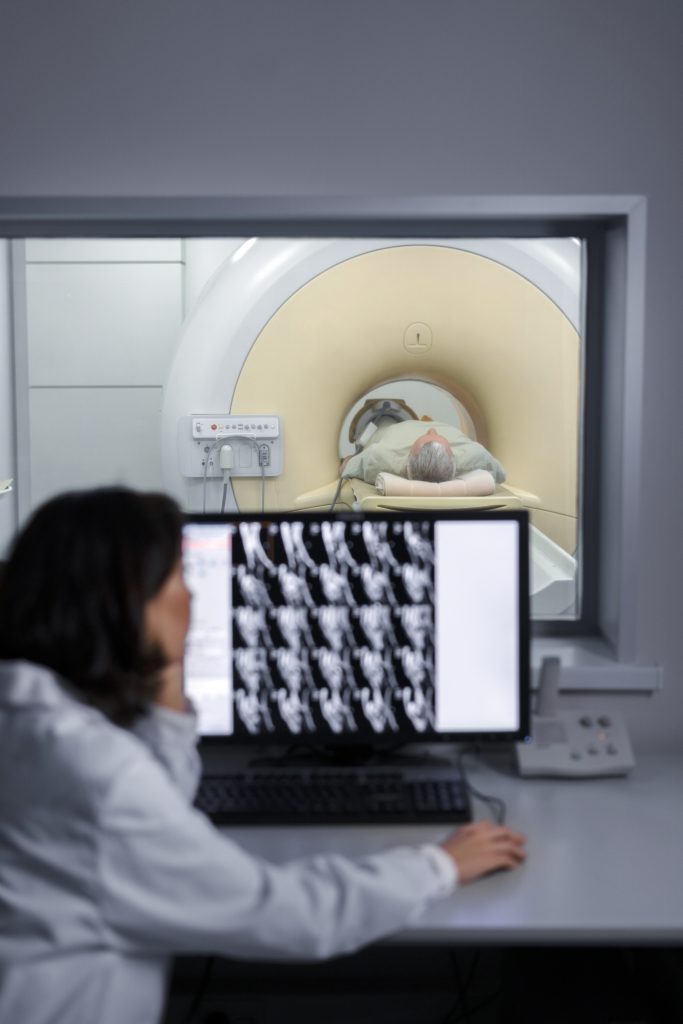
Applications of SoC in the Medical Domain
Medical Imaging & Diagnostics
- Ultrasound Systems
- SoCs process real-time imaging data from transducers with minimal latency.
- Example: Qualcomm Snapdragon in portable ultrasound (Philips Lumify).
- MRI & CT Controllers
- SoCs handle signal acquisition, image reconstruction, and pre-processing before sending to a workstation.
- Endoscopic Cameras
- SoCs provide on-board image enhancement and compression for live streaming.
Patient Monitoring Systems
- Wearable ECG/EEG Monitors
- SoCs with analog front-end (AFE) and wireless modules capture, process, and transmit bio signals.
- Pulse Oximeters & Blood Pressure Monitors
- SoCs integrate sensor reading, signal filtering, and display functions in one device.
- ICU Bedside Monitors
- Multi-channel SoCs process simultaneous readings from ECG, SpO₂, BP, and respiratory sensors in real time.
Implantable & Portable Therapeutic Devices
- Pacemakers & Defibrillators
- Ultra-low-power SoCs control heart rhythm sensing and stimulation.
- Cochlear Implants
- SoCs handle real-time audio processing and neural stimulation patterns.
- Portable Insulin Pumps
- SoCs ensure precise motor control, safety alarms, and dosing algorithms.
Laboratory & Point-of-Care Devices
- DNA Sequencers
- SoCs with DSP/AI cores process optical sensor data directly in the instrument.
- Portable Blood Analyzers
- Integrate sample detection, computation, and result display.
- Lab-on-a-Chip Systems
- Edge AI-enabled SoCs analyze test results without needing a full PC.
Telemedicine & Medical IoT
- Remote Patient Monitoring Gateways
- SoCs aggregate data from multiple wireless medical devices and send securely to cloud servers.
- Smart Home Health Devices